BRAND IDENTITY & WEB DESIGN
Gaya Reconnect: Building a Mental Health Brand & Platform from the Ground Up
PROJECT OVERVIEW
Brand & Website from Scratch
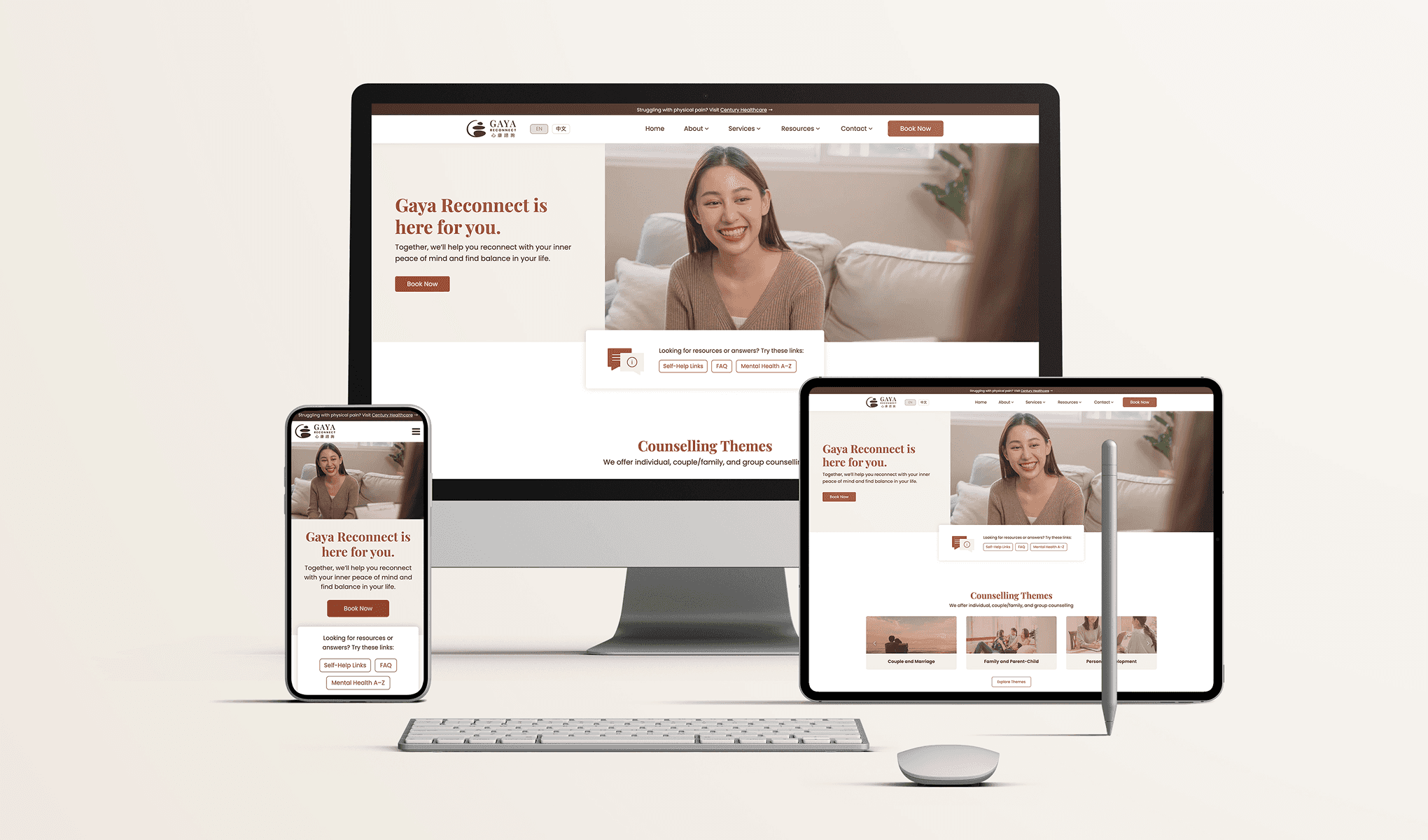
Gaya Reconnect, a mental health clinic serving the Chinese-Canadian community in BC, needed to establish their brand and digital presence from scratch. As the sole designer, I led the complete project lifecycle—from UX research and brand identity development to designing and building a bilingual platform for mental health services.
MY ROLE
End-to-End Design Leadership
Responsibilities
Surveyed 36 bilingual participants to identify barriers to mental health access
Developed complete brand identity including logo, colour system, typography, and brand guidelines
Designed information architecture and bilingual site structure for 40 pages per language
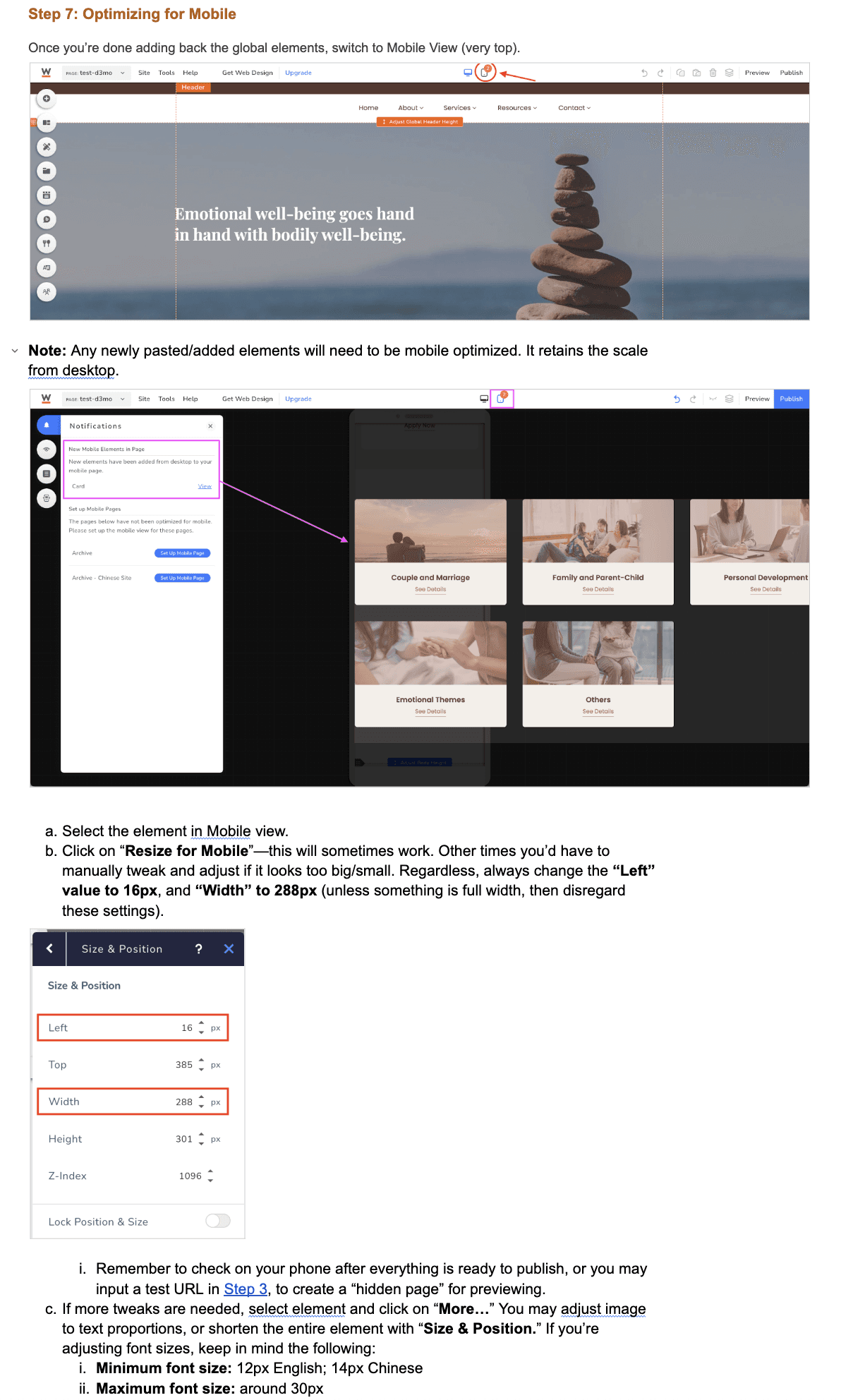
Built separate desktop and mobile layouts for 80 bilingual pages on Website.com due to platform's limited responsive capabilities
Created comprehensive handoff documentation + video walkthrough to ensure brand integrity
RESEARCH & DISCOVERY
Uncovering User Needs
The Challenge
Gaya Reconnect needed a complete brand and digital presence from scratch—serving bilingual English and Mandarin-speaking communities in BC. The challenge: build a trustworthy, culturally sensitive mental health platform while working within Website.com's platform constraints.
Research Approach
I surveyed 36 participants—bilingual (English/Mandarin) adults in Greater Vancouver—to understand how people seek mental health services and what builds trust. I also conducted task analysis and user journey mapping to identify key design opportunities.
Key Insights
36 Participants
Ages 55+
Bilingual (English/Mandarin)
Greater Vancouver
Counsellor Compatibility & Trust
Language and cultural background are the primary trust-builders.
Detailed practitioner profiles are essential to allow users to verify cultural compatibility before booking.
"說中文" (Speaks Chinese) mentioned repeatedly
Awareness & Education Gap
Many do not recognize when emotional distress requires professional support.
Integrating educational content is necessary to bridge the gap between "ignoring emotions" and seeking care.
"Most people might ignore [emotions]”
User Persona
Survey respondents were predominantly 55+ (vs client's assumption of 35-45). The persona reflects bilingual adults seeking culturally compatible mental health support.

Goals
Find a Mandarin-speaking counsellor with shared cultural background
Understand if symptoms require mental health support
Get treatment addressing both physical pain and emotional well-being
Pain Points
Difficulty recognizing when to seek mental health help
Distrust of online booking systems
Treatment cost concerns
Prefers direct staff communication over automation
BRAND IDENTITY
Building Trust Through Design
Brand Direction
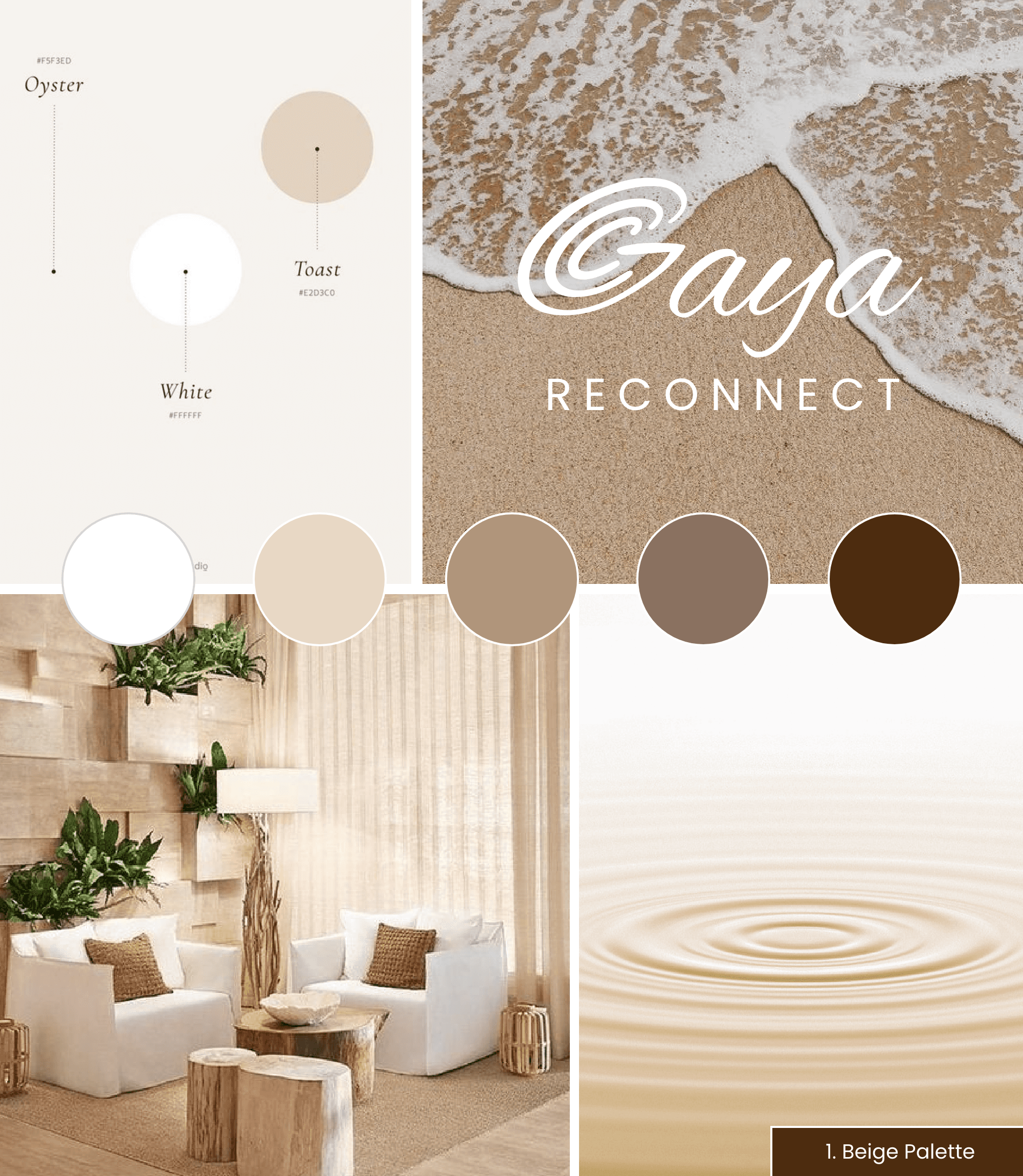
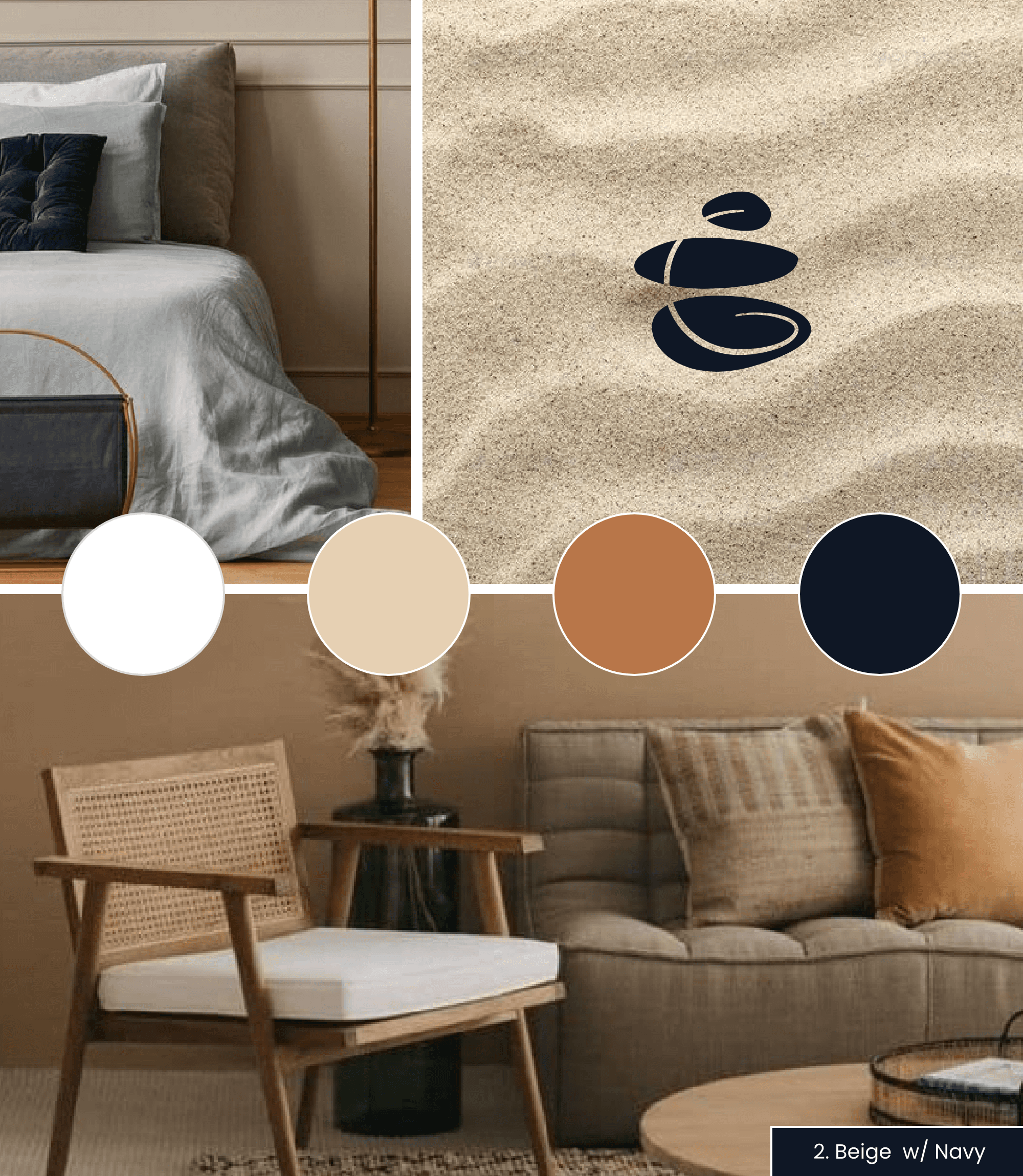
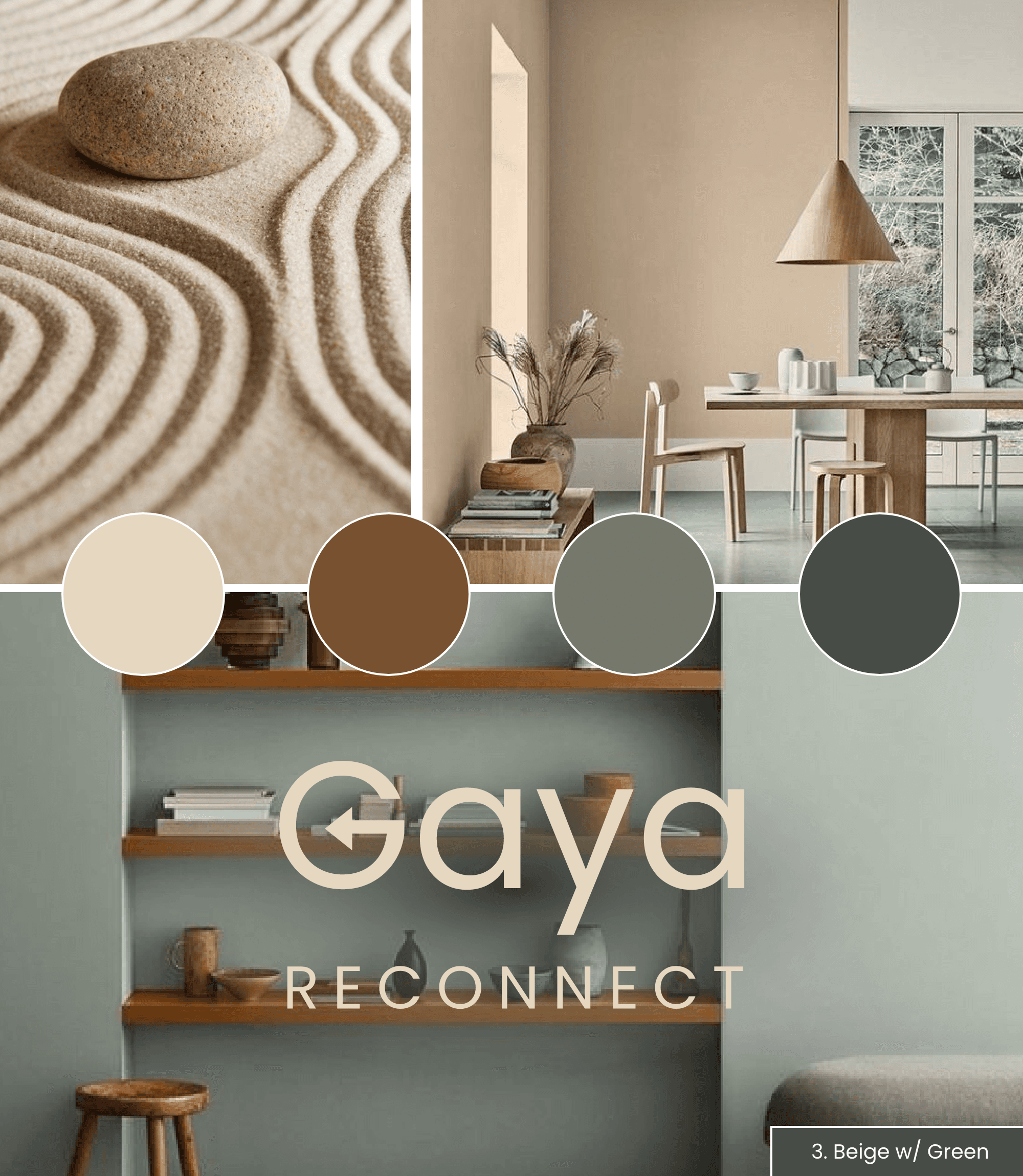
I developed three moodboard directions exploring different approaches to zen, inclusive, empathetic, and warm positioning. Through stakeholder discussions, we synthesized elements from each direction to create the final brand identity.
Visual Identity
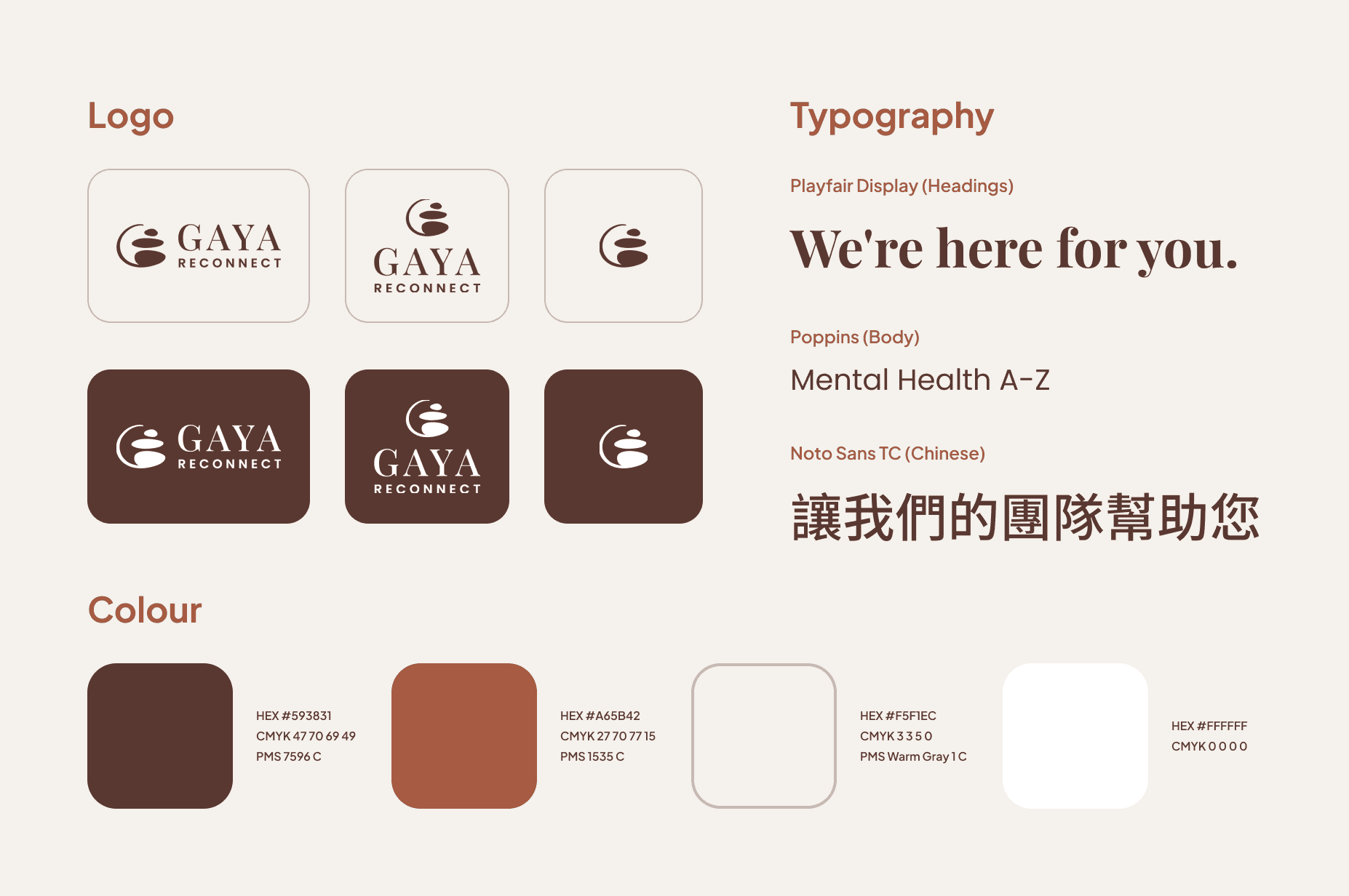
The final identity combined warm tones and organic forms from the moodboard exploration, designed to balance approachability with professionalism:
Logo: Balancing stones representing zen, balance, and harmony—core to the clinic's holistic approach
Colour Palette: Warm colours conveying trust and calmness, all meeting WCAG contrast standards
Typography:
Poppins: Friendly sans-serif for approachability and accessibility
Playfair Display: Balanced serif conveying professionalism
Noto Sans TC: Optimized for Chinese character legibility
Brand Guidelines
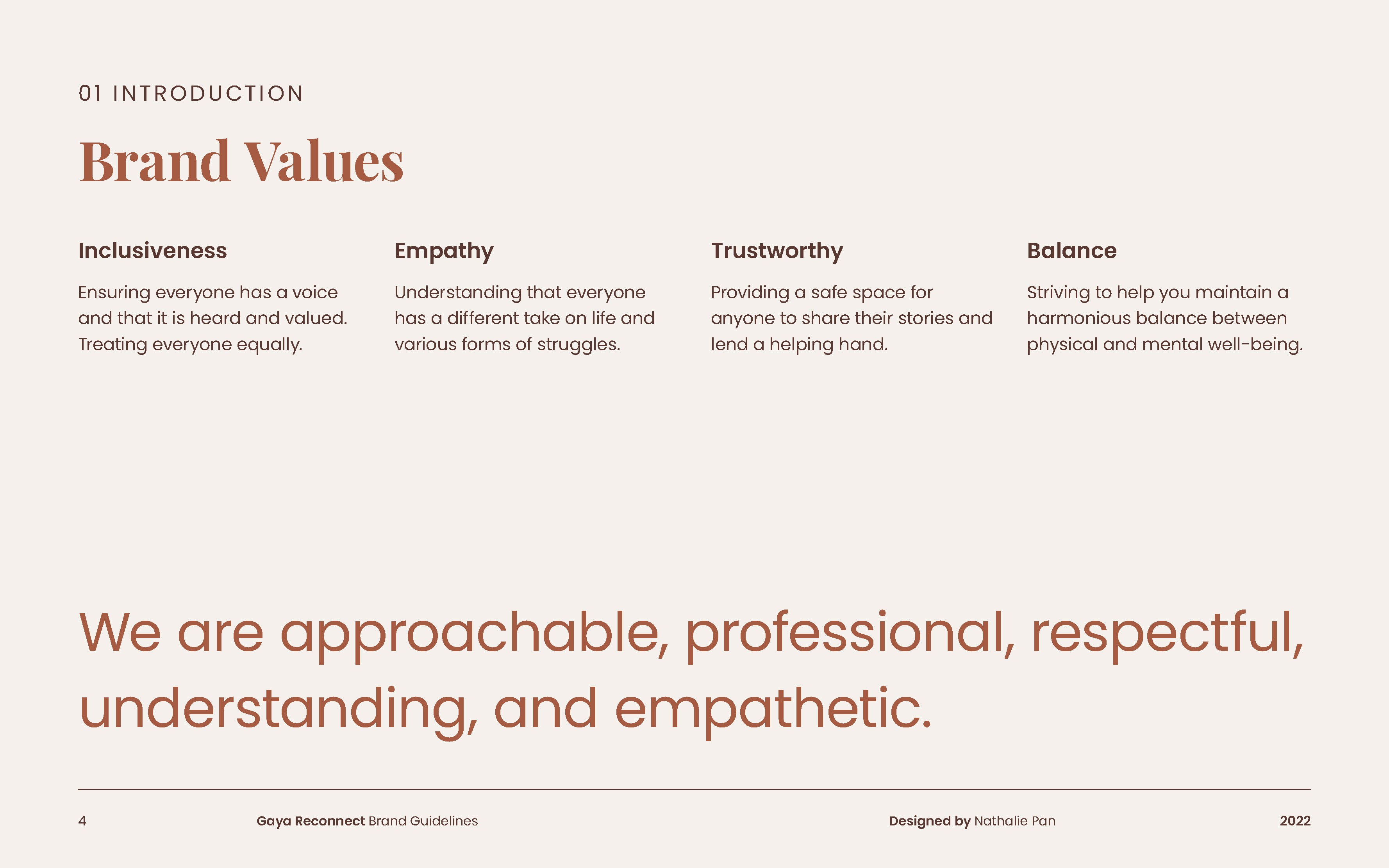
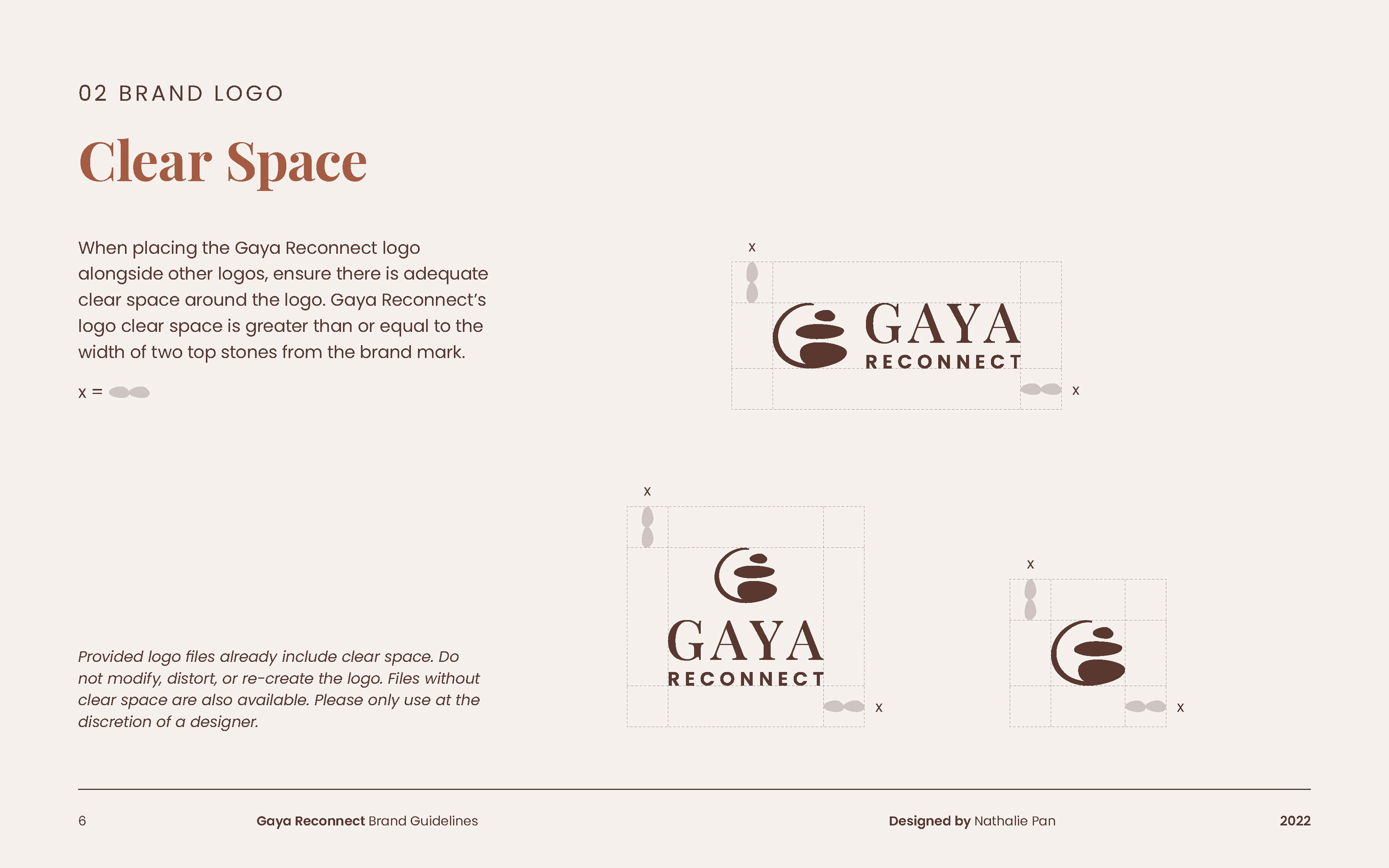
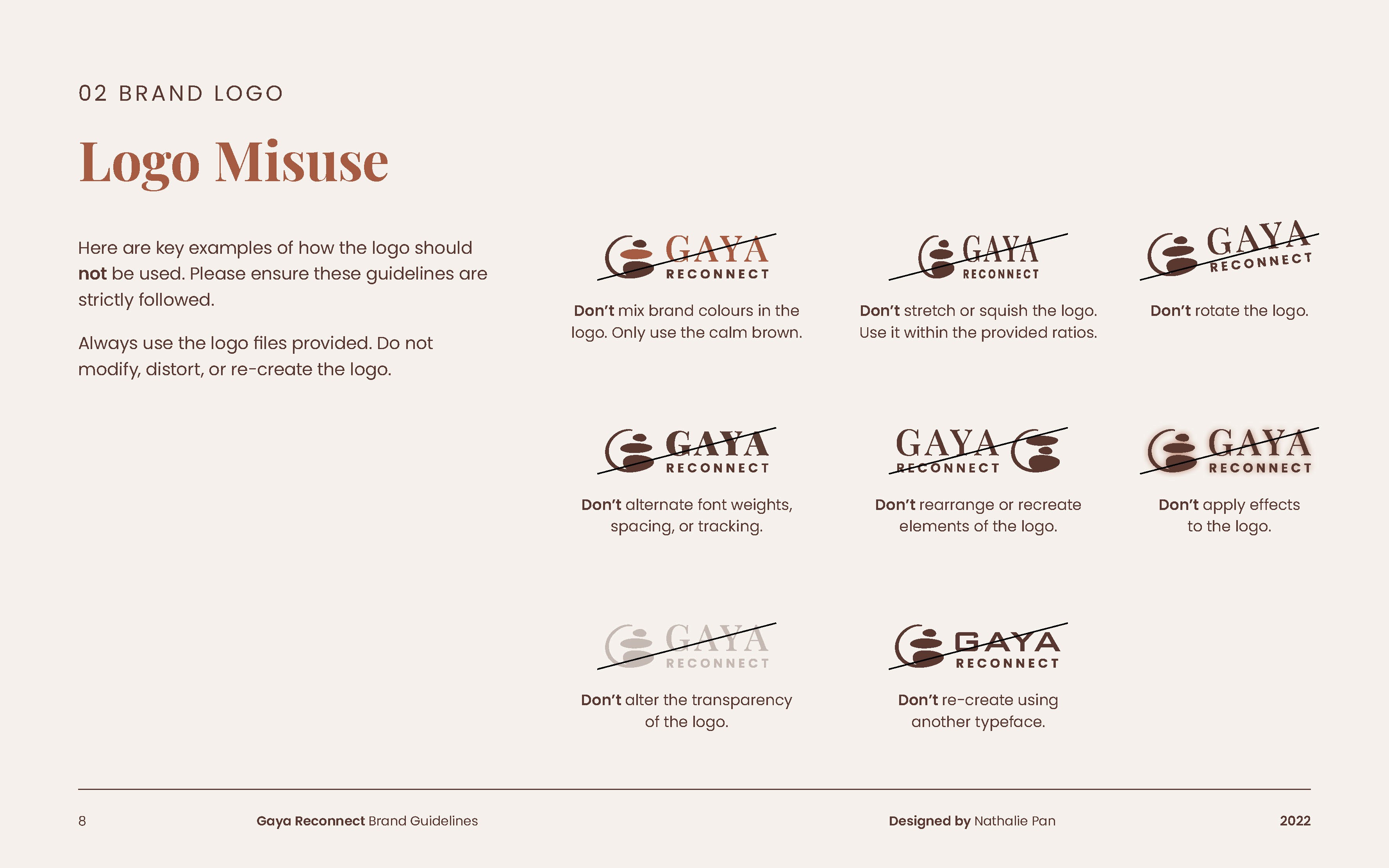
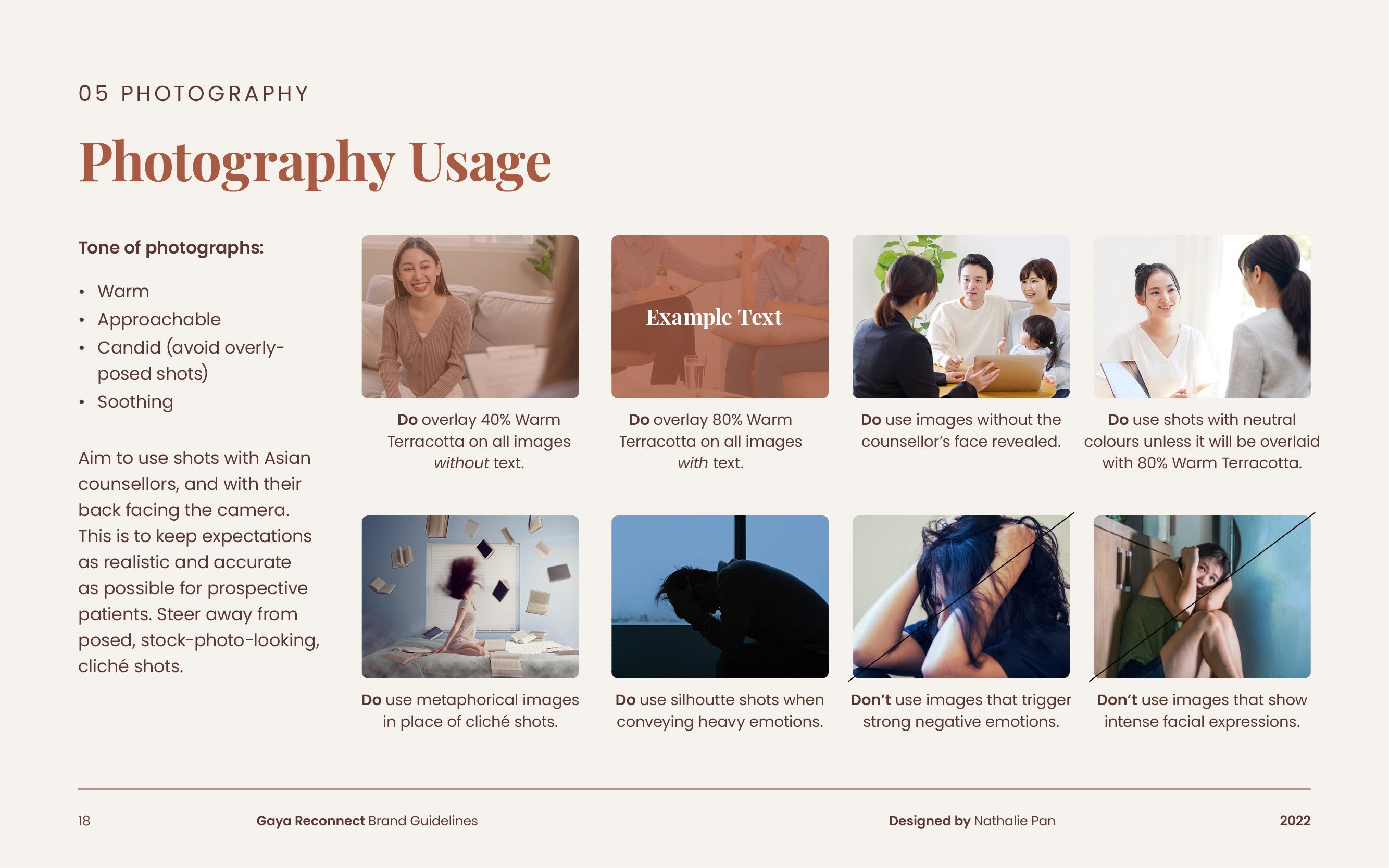
I created comprehensive brand guidelines covering logo usage, colour applications, and typography hierarchy—designed for non-designers on the client's team to maintain brand integrity after handoff.
Website Design
Designing the Bilingual Platform
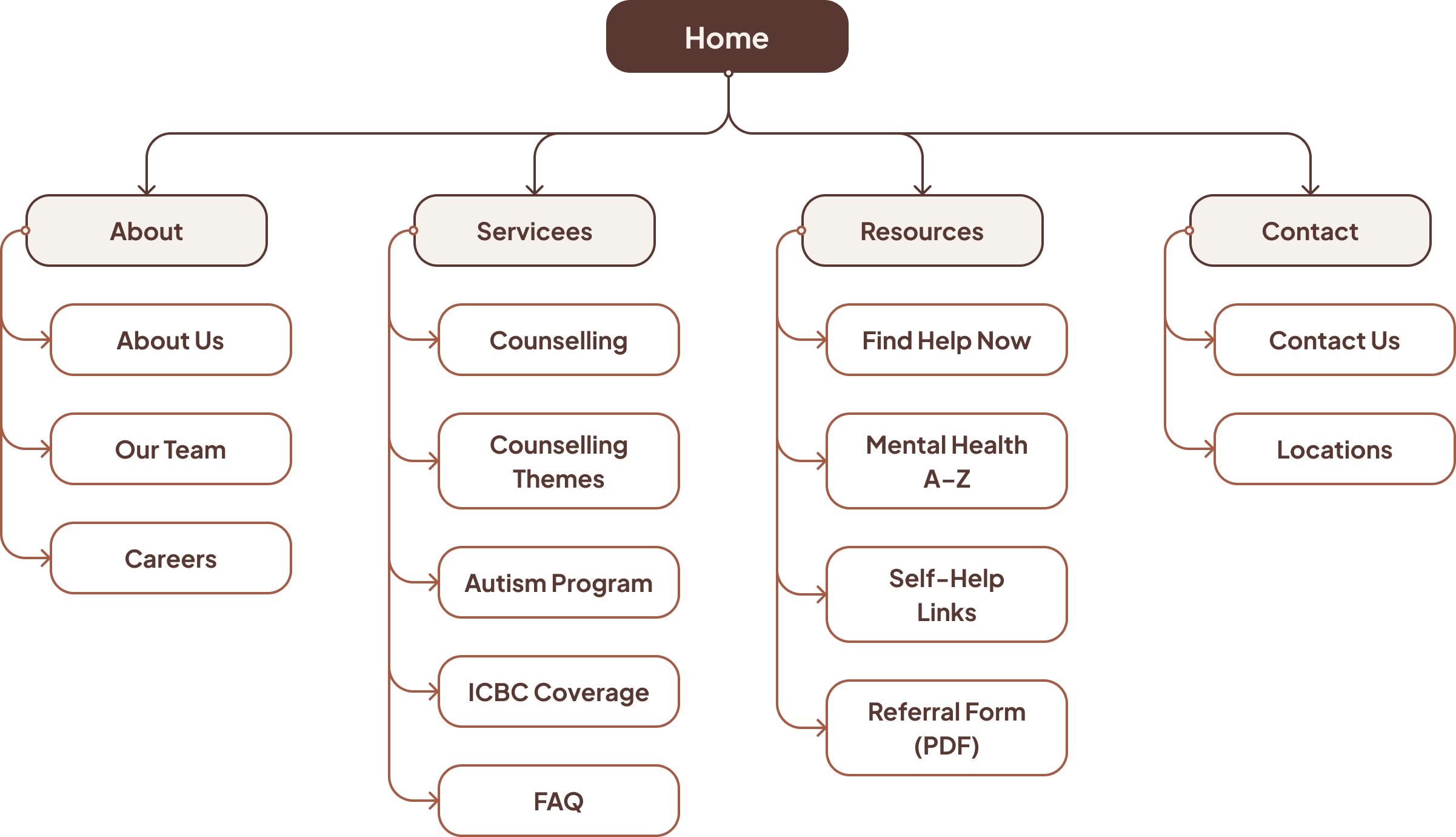
Information Architecture
I structured the site to accommodate 40 pages per language while maintaining consistent navigation and information hierarchy across both English and Chinese versions.
Site structure: Home, About, Services, Resources (Mental Health A-Z, help lines, community support), Events, and Contact—40 pages per language.
Bilingual Design
All 40 pages were designed in both English and Chinese, requiring flexible layouts to accommodate different text lengths and cultural contexts while maintaining equivalent user experiences.
Counselling Page
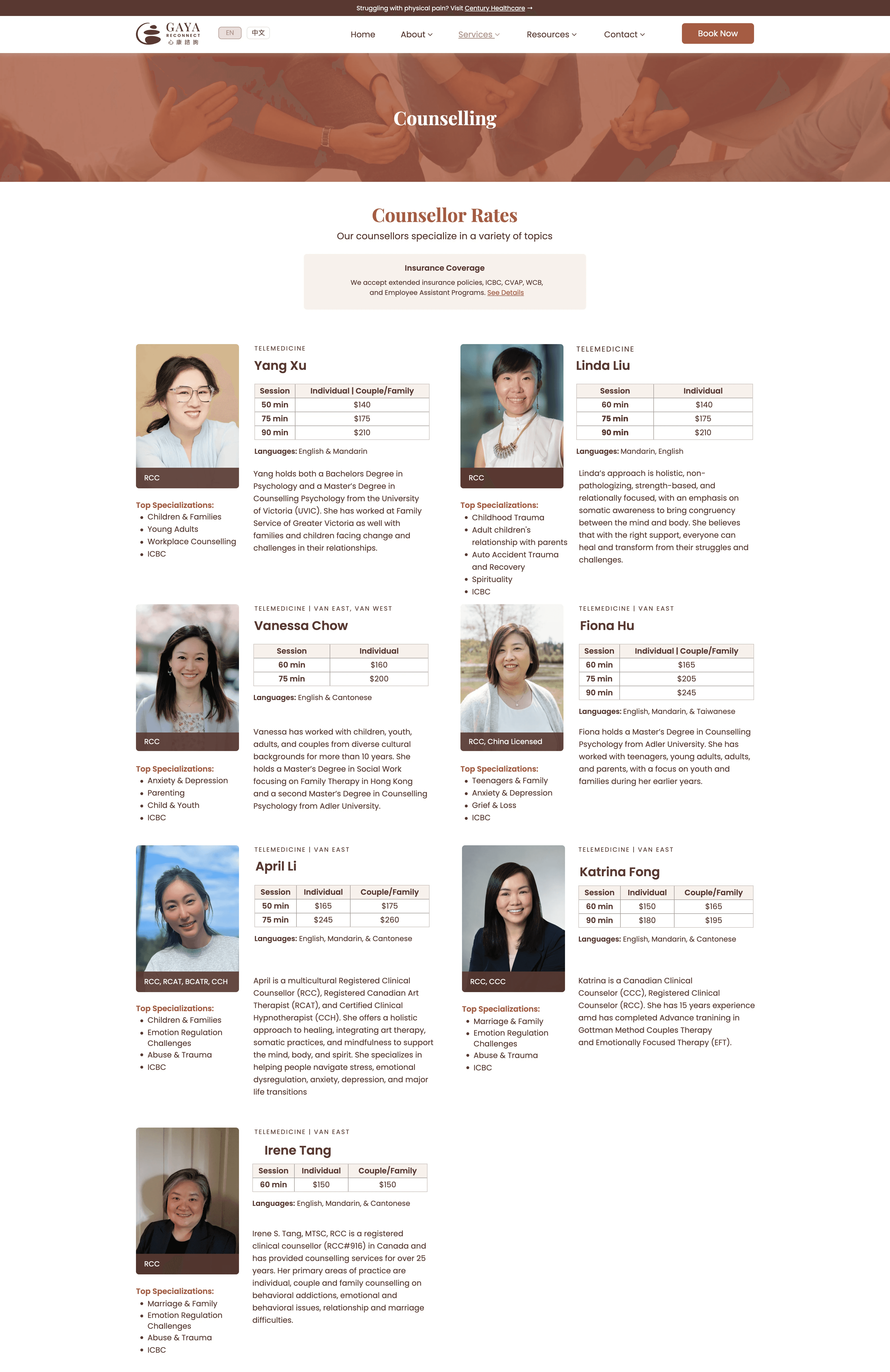
Wireframes to High-Fidelity
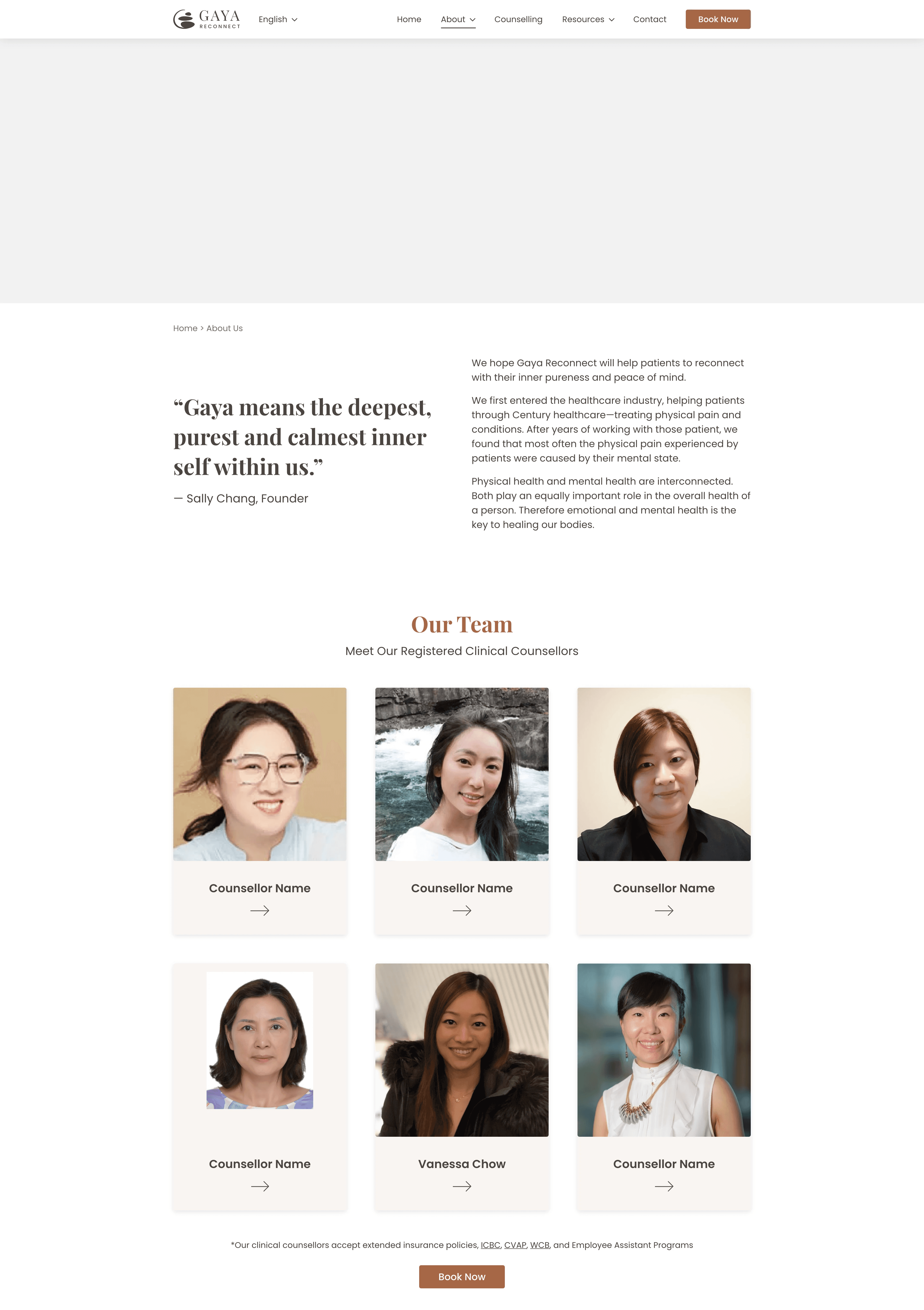
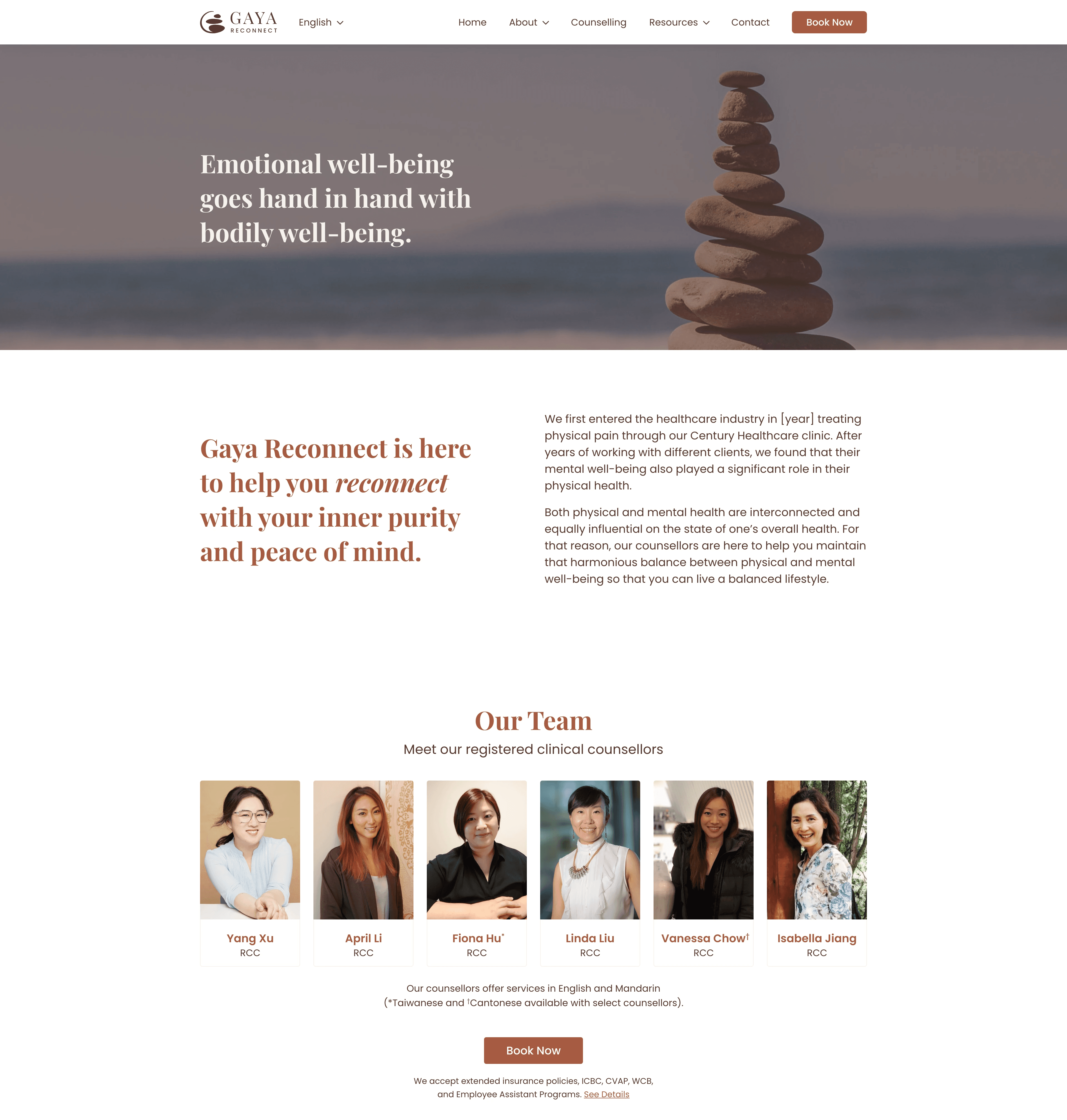
About Us Page
Wireframe (Lo-Fi)
Mockup (Hi-Fi)
IMPLEMENTATION
Building & Launching the Platform
Website Development
Built 80 bilingual pages (40 per language) with separate desktop and mobile layouts.
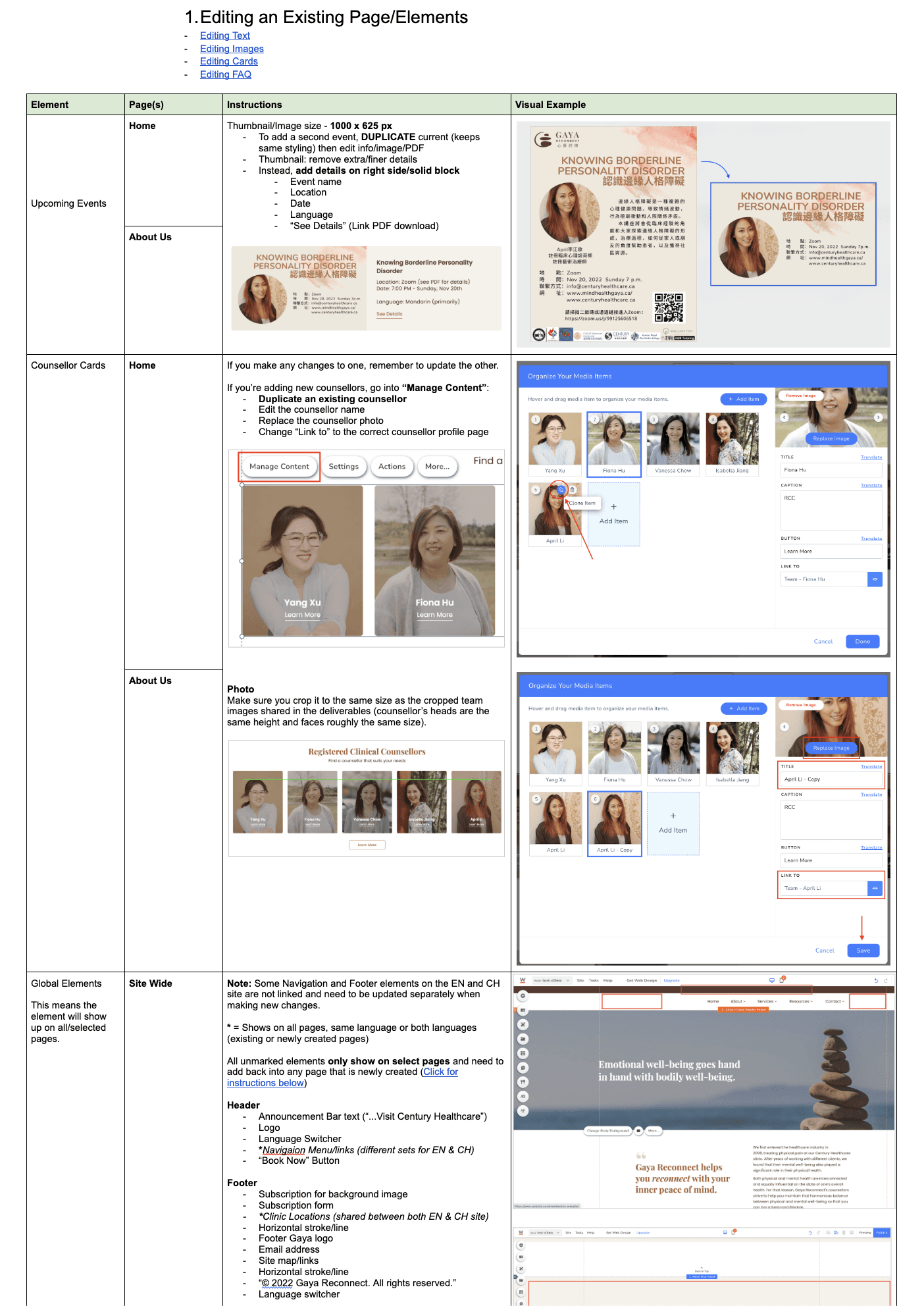
Handoff & Documentation
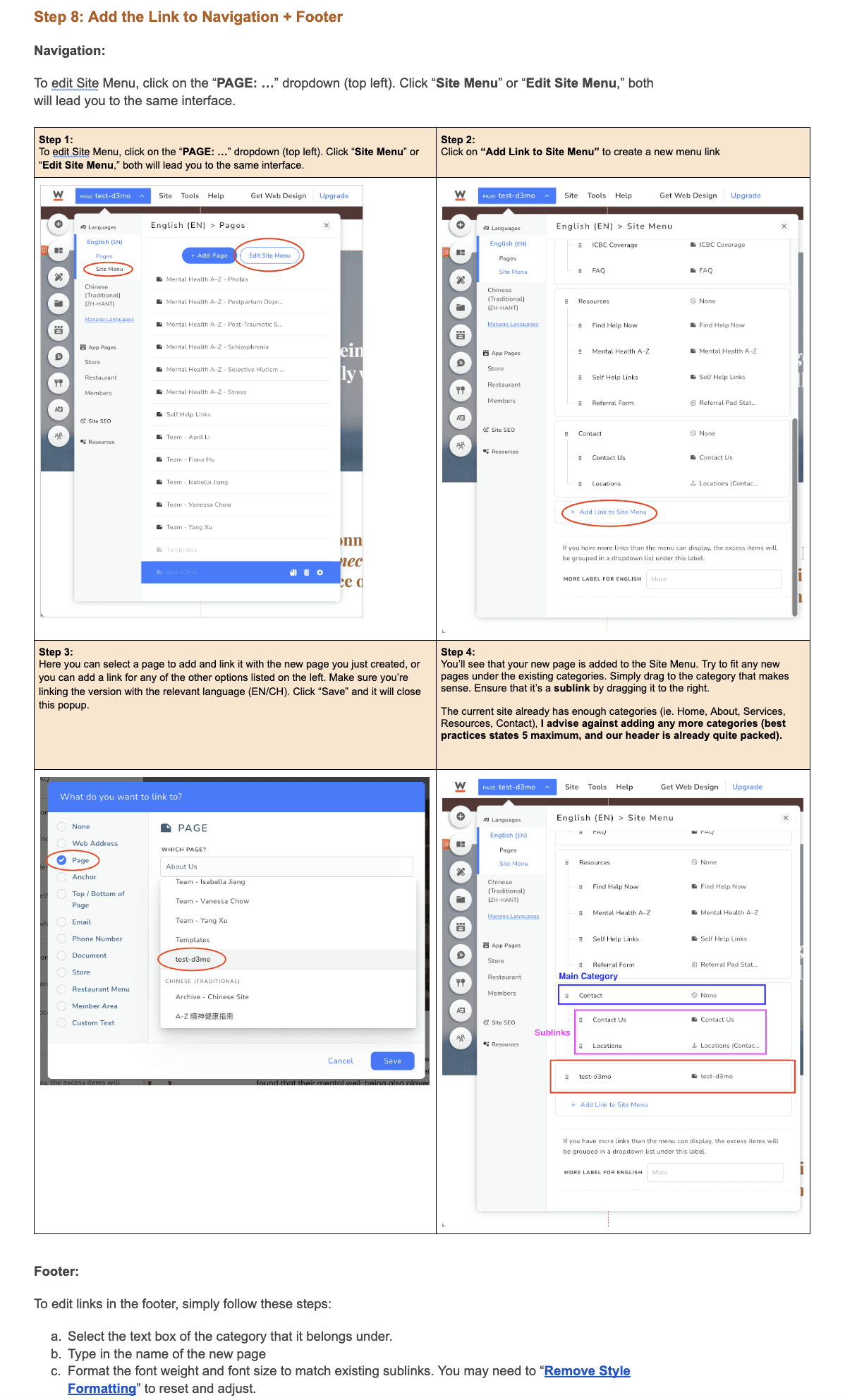
I created comprehensive handoff documentation including brand guidelines, platform tutorials, content templates, and a video walkthrough—enabling the client's team to maintain the site independently.
IMPACT
Problems Solved
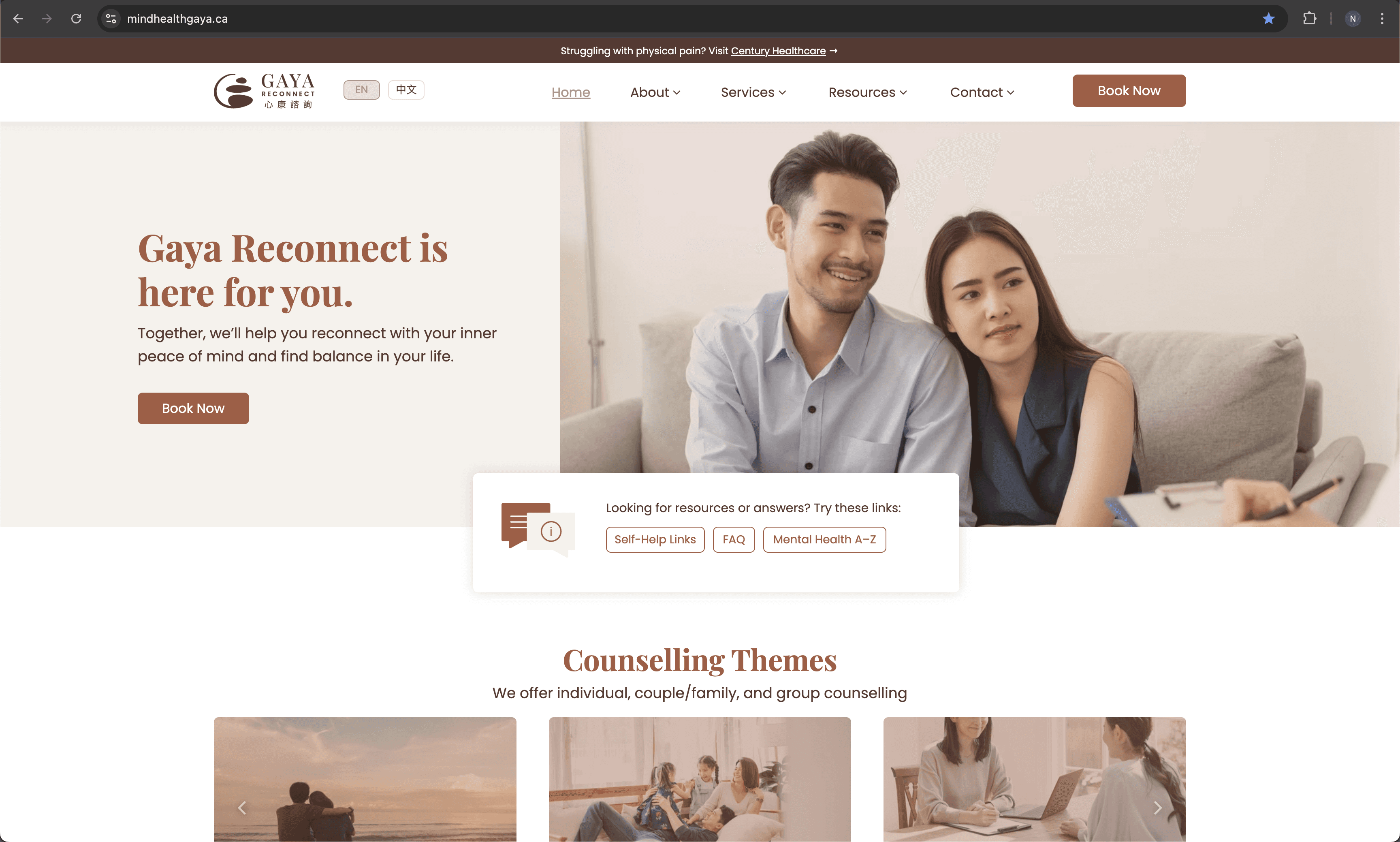
Live at mindhealthgaya.ca since December 2022.
Establishing a Trusted Mental Health Brand
Challenge
Lack of dedicated branding created a trust gap between the clinic and the Chinese-Canadian community.
Outcome
Developed a brand system that balances professionalism with cultural warmth, positioning the clinic as a recognizable specialist.
Designing a Dedicated Bilingual Platform
Challenge
Mental health resources were buried within a multidisciplinary site, creating significant navigation friction.
Outcome
Architected a standalone bilingual platform that provides direct, intuitive access to care and educational resources in the user’s preferred language.
Simplifying the Search for Compatible Expertise
Challenge
Finding a counsellor with specific linguistic and cultural expertise was difficult, leading to hesitation at booking.
Outcome
Designed a high-granularity provider directory that empowers patients to verify cultural compatibility autonomously, shortening the path to care.
Ongoing Success
Site remains actively used by patients seeking mental health services
Client team successfully maintains brand integrity using provided guidelines
Bilingual platform serves both English and Chinese-speaking communities
Resource section provides ongoing mental health education and support access
Reflection
What I Learned
This was my first end-to-end UX project, teaching me valuable lessons about solo project management and client collaboration.
Key Takeaways
Clear timelines and regular check-ins maintain momentum while allowing flexibility for client feedback and content gathering
Gathering comprehensive content early ensures efficient use of time and reduces delays
Creating documentation for non-designers requires explaining both the "what" and "why" of maintaining systems
Recommended Next Steps
If continuing this project, I would:
Research why the target demographic (ages 35-45) isn't engaging with the service as much as the older demographic (55+)
Conduct usability testing with actual patients to validate navigation and content findability